
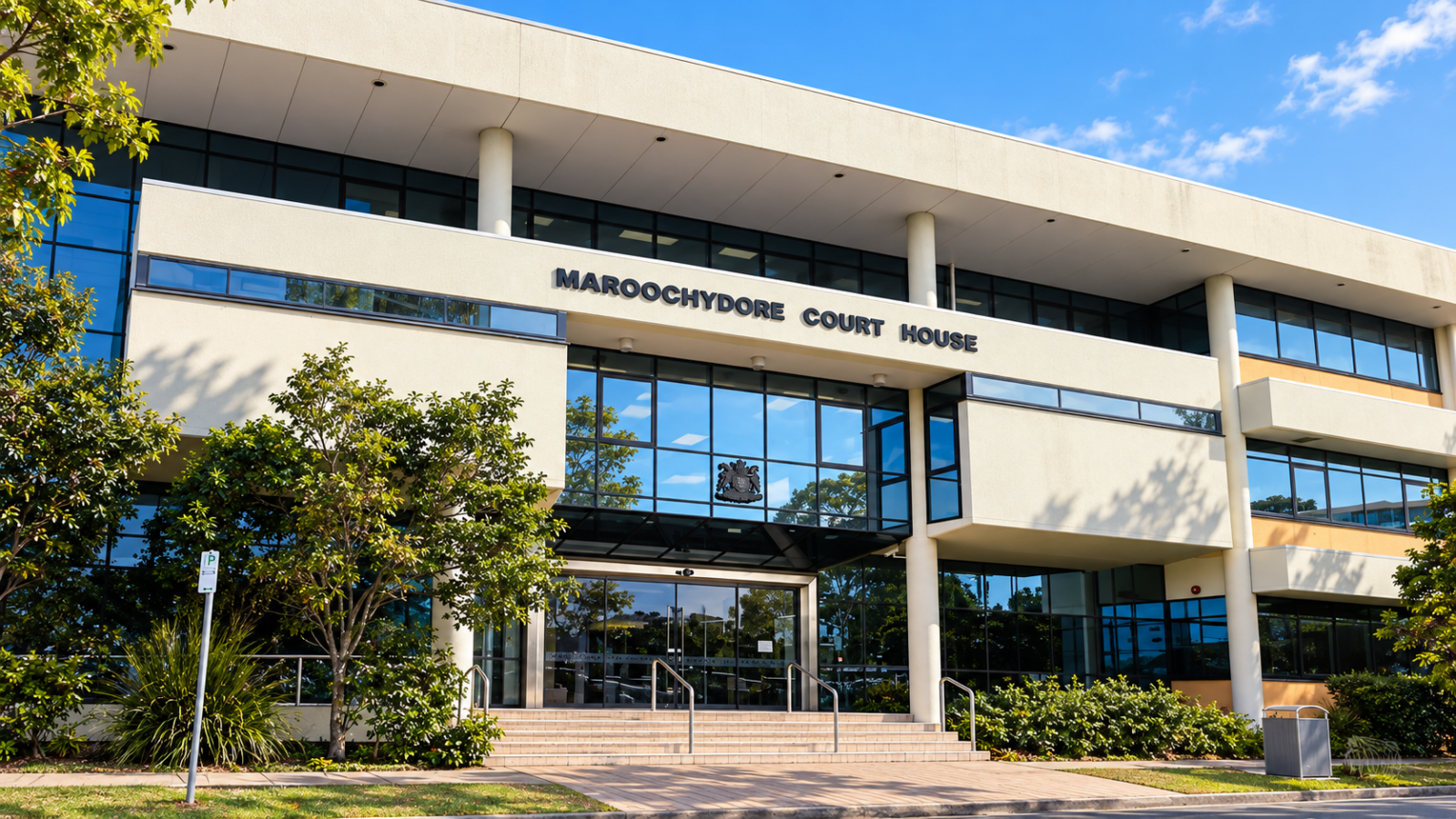
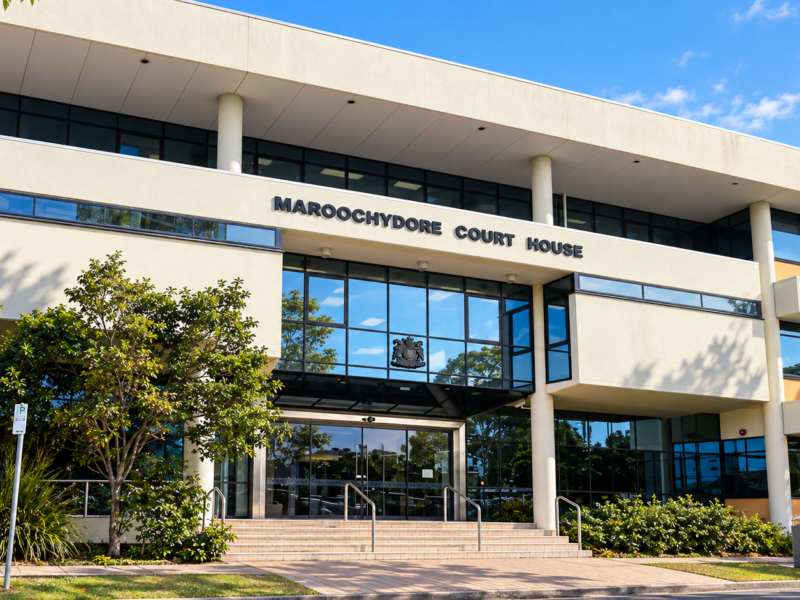
Executive summary of the Sunshine Coast Courts
The Sunshine Coast Courts comprise Magistrates Courts at Maroochydore, Caloundra, Nambour and Noosa, together with the District Court and Planning and Environment Court sitting at Maroochydore. For ordinary civil money claims, the Magistrates Court deals with claims up to $150,000, the District Court with claims from $150,001 to $750,000, and the Supreme Court with claims above $750,000 or matters within its broader jurisdiction. QCAT generally deals with minor debt disputes up to $25,000, but it is a tribunal, not one of the Sunshine Coast Courts. The correct forum depends on the relief sought, the legislation creating the cause of action, the amount claimed and the proper registry—not simply the party’s postcode. Court dates and registry arrangements should always be checked shortly before attendance.
For a person attending a hearing, the immediate tasks are practical: read the sealed document to identify the court and file number; check the daily law list; allow time for security; bring the filed material in an organised form; and do not assume that an email to the registry amounts to filing. A defendant served with a Queensland claim usually has 28 days to file and serve a notice of intention to defend and defence. Missing that period may expose the defendant to default judgment.
Sunshine Coast Courts at a glance
| Court location | What sits there | Registry details |
| Maroochydore — Cornmeal Parade, Maroochydore Qld 4558 | District Court, Magistrates Court and Planning and Environment Court | (07) 5376 5100; courthouse.maroochydore@justice.qld.gov.au |
| Caloundra — 3 Gregson Place, Caloundra Qld 4551 | Magistrates Court | (07) 5293 4100; courthouse.caloundra@justice.qld.gov.au |
| Nambour — 156–168 Currie Street, Nambour Qld 4560 | Magistrates Court | (07) 5374 7900; courthouse.nambour@justice.qld.gov.au |
| Noosa — Langura Street, Noosa Qld 4567 | Magistrates Court | (07) 5473 2200; courthouse.noosa@justice.qld.gov.au |
Addresses and contact details are taken from the current Queensland Courts courthouse directory. Court operations, sitting days and counter hours can change. Confirm them with the registry rather than relying on an old letter, directory entry or map listing.
Which Sunshine Coast Court has jurisdiction?
Choosing a court is a legal decision before it is a geographical one. Jurisdiction concerns the court’s power to decide the dispute. Venue concerns where the proceeding should be started or heard. A claim filed at a convenient Sunshine Coast registry can still be defective if it is brought in the wrong court or under the wrong originating process.
| Forum | Typical civil work | Monetary position |
| QCAT | Minor debts, residential tenancy and other matters conferred by statute | Minor debt disputes up to $25,000, excluding interest |
| Magistrates Court | Debt, contract, damages and other personal actions within jurisdiction | Up to $150,000 |
| District Court | Larger civil disputes; also appellate and specialist work conferred by statute | $150,001 to $750,000 for ordinary money disputes |
| Supreme Court | Claims above the District Court limit; equitable, supervisory and other superior-court jurisdiction | Above $750,000, or where the nature of the relief requires the Supreme Court |
Magistrates Courts on the Sunshine Coast
The Magistrates Court is the usual entry point for civil claims not exceeding the prescribed limit. The current limit is reflected in s 4 of the Magistrates Courts Act 1921 (Qld). It also hears criminal and traffic matters, domestic and family violence applications and various statutory proceedings. Those streams have different legislation, forms and listing practices; a civil debt guide should not be applied to them by analogy.
A $92,000 unpaid invoice claim may fall within the Magistrates Court’s monetary jurisdiction, but that does not answer every question. The claimant still needs a legally recognisable cause of action, the correct parties, a properly pleaded claim and valid service. Stonegate Legal’s guide to drafting and filing a statement of claim in Queensland explains the pleading task in more detail.
Maroochydore District Court
The Maroochydore District Court is the principal intermediate court among the Sunshine Coast Courts. Its ordinary civil jurisdiction extends to the monetary limit fixed by s 68 of the District Court of Queensland Act 1967 (Qld). The Queensland Courts describes the District Court as dealing with civil disputes between $150,000 and $750,000. The overlap at $150,000 needs careful drafting: the Magistrates Court limit is up to $150,000, so the District Court range is ordinarily expressed as $150,001 to $750,000 for money claims.
The District Court also has criminal jurisdiction and exercises other functions conferred by legislation. A case is not properly commenced there merely because it is commercially serious. The amount, relief and statutory source of jurisdiction must be checked.
Supreme Court matters affecting Sunshine Coast litigants
There is no permanent Supreme Court registry listed at Maroochydore, Caloundra, Nambour or Noosa. The Supreme Court of Queensland is nevertheless the superior state court for Sunshine Coast litigants. Under s 45 of the Supreme Court of Queensland Act 1991 (Qld) the Trial Division may exercise the Court’s jurisdiction and powers except those reserved to the Court of Appeal. It hears claims above the District Court limit as well as matters where the nature of the relief or legislation calls for Supreme Court jurisdiction. Regional sittings and individual arrangements must be checked against the current court calendar and directions.
A company seeking an urgent injunction to restrain misuse of confidential information may need the Supreme Court even if the immediate monetary loss cannot yet be quantified. That is a different jurisdictional analysis from simply valuing a debt. Filing in a lower court to save fees may create delay, transfer issues and costs that outweigh any apparent saving.
Planning and Environment Court at Maroochydore
The Planning and Environment Court sits at Maroochydore and deals with matters conferred by planning and environmental legislation, including development appeals and enforcement proceedings. It is constituted within the District Court structure, but it is not a general venue for neighborhood, construction or property disputes merely because land is involved. Its Maroochydore contact details appear in the Queensland Courts directory.
QCAT is not a court
QCAT is often described informally as a small-claims forum. Legally, it is a tribunal created by the Queensland Civil and Administrative Tribunal Act 2009 (Qld). Its minor debt jurisdiction is generally confined to a fixed or agreed debt up to $25,000, excluding interest. QCAT also has jurisdiction in residential tenancy, building and other matters under specific legislation. The correct QCAT pathway depends on the enabling Act, not merely the amount in dispute.
QCAT hearings may be conducted outside Brisbane, including through Magistrates Court venues, but the listing notice controls where and how the matter will be heard. A successful minor-debt decision may still require registration and enforcement through a court. Stonegate Legal’s guide to enforcing a QCAT decision addresses that distinct step.
Starting civil proceedings in the Sunshine Coast Courts
The claim, the parties and the originating process
Most ordinary civil claims begin with a claim and statement of claim. Other relief is sought by originating application. The distinction matters because the forms, supporting evidence and procedural timetable differ. Under r 8 of the Uniform Civil Procedure Rules 1999 (Qld) a proceeding must be started by the originating process required or permitted by the rules or other law.
Before filing, identify the legal entity to be sued. A trading name is not necessarily a legal person. Obtain a current company or business-name search, check the contract, and match the pleaded party to the person or corporation said to owe the obligation. Correcting a party after limitation has expired can be difficult and expensive.
Filing and the correct registry
Civil matters in the Magistrates Court can be managed through QCase, a secure online portal. Other filing pathways vary by court and matter. The Queensland Courts filing documents page should be checked for the current method. A document drafted or emailed is not filed unless the registry accepts it and assigns the appropriate filing record.
The Sunshine Coast Courts registry staff can explain administrative requirements, fees and listing information. They cannot advise whether a cause of action is viable, calculate limitation periods, draft pleadings or recommend litigation strategy.
For that reason, selecting among the Sunshine Coast Courts should occur before the originating process is drafted, not at the filing counter.
Service is a procedural event, not a courtesy copy
An originating process must be served in the way required by the UCPR. Personal service, service on a corporation and service outside Queensland are governed by different provisions. If ordinary service is impracticable, r 116 UCPR permits the court to order substituted service or steps designed to bring the document to the person’s attention.
Case example one: Embrey v Smart and substituted service
Embrey v Smart [2014] QCA 75 explains that r 116 requires present impracticability in serving a document by the prescribed method. The evidence must address the position when the application is made. A claimant cannot treat substituted service as a convenient first option; reasonable attempts and reliable evidence about the proposed alternative method are central to the application.
Consider a defendant who no longer lives at the address on an old contract. One unanswered visit will rarely establish the necessary factual foundation. Searches, enquiries, repeated attendances at suitable times and evidence connecting the defendant to an email address or social-media account may be needed. The precise steps depend on the case. Stonegate Legal’s detailed guide to substituted service in Queensland examines that process.
After a claim is served in the Sunshine Coast Courts
The defence deadline
A defendant who disputes a civil claim ordinarily files a notice of intention to defend and defence within 28 days after service. The Queensland Courts’ current money-dispute guidance identifies Form 6 and Form 17 and the 28-day period. A defence must answer the material allegations and plead the material facts supporting any positive defence; it is not enough to write that the claim is unfair.
Stonegate Legal’s guide to drafting a defence and reply deals with admissions, denials, non-admissions and positive defences. If no defence is filed, the claimant may seek default judgment where no defence has been filed, subject to the rules and proof required for the particular claim.
Pleadings, disclosure and evidence
Once pleadings close, the real work is often documentary. Parties to civil proceedings may have disclosure obligations under Chapter 7 of the UCPR. Those obligations are issue-based and continuing; disclosure is not an invitation to dump every document ever exchanged. Stonegate Legal’s guide to disclosure of evidence in Queensland explains the scope, timing and privilege issues.
A building dispute illustrates the point. The signed contract may establish scope and price, but the decisive material may be the variation requests, site photographs, expert reports, payment schedules and contemporaneous messages. Those documents need to be collected early, preserved in their original form and mapped to the pleaded issues. Waiting until witness statements are due usually produces cost and inconsistency.
Interlocutory applications and summary judgment
The Sunshine Coast Courts can determine procedural and dispositive applications before trial. Under r 292 UCPR and r 293 UCPR a plaintiff or defendant may seek summary judgment where the opposing case has no real prospect of success and there is no need for a trial. That is a demanding test. A disputed debt does not become suitable for summary judgment simply because one party considers the other’s evidence weak.
Case example two: Spencer v Commonwealth and a trial-worthy issue
Spencer v Commonwealth of Australia [2010] HCA 28 considered the statutory expression “no reasonable prospect” in the federal context. The High Court rejected the idea that summary dismissal is confined to cases that are hopeless or bound to fail, while emphasising that the power must be applied to the actual issues and evidence. Queensland’s rules use the language of no real prospect. The practical lesson is the same: summary determination is not a miniature trial on incomplete material. Stonegate Legal’s summary judgment guide for debt recovery explains the Queensland procedure.
Attending Sunshine Coast Courts
Check the law list and the hearing notice
The hearing notice or sealed court document is the starting point. Check the court, date, time, file number and whether the appearance is in person, by telephone or by video. Queensland’s daily law lists are updated at different times: Supreme and District Court lists are generally published for the following day, while Magistrates Court lists can change on the morning. A law list is useful, but it does not replace an order or notice directed to a party.
What to bring and how to conduct yourself
- Arrive early enough to pass through security and find the courtroom.
- Bring the sealed or filed versions of the documents, the orders sought, a chronology and a concise note of the points to be made.
- Turn off or silence electronic devices. Do not record, photograph or broadcast proceedings without permission.
- Stand when the judicial officer enters or leaves, speak when invited, and address the judicial officer appropriately.
- If a witness is giving evidence, do not coach, interrupt or discuss their evidence while they remain under oath.
Queensland Courts’ courtroom conduct guidance explains the expected behaviour. A self-represented party is not excused from court orders, evidence rules or filing deadlines, although the court will usually explain the immediate procedure in clear terms.
Costs, settlement and enforcement
Court litigation carries adverse-cost risk. The ordinary position is that costs follow the event, but costs remain discretionary and can be affected by offers, procedural defaults, unnecessary issues and the way the case is conducted. QCAT has a different statutory costs regime and should not be treated as a cheaper version of the Magistrates Court without examining jurisdiction and recoverability.
Settlement can occur before filing, at mediation, after disclosure or even during trial. A workable settlement should deal with payment dates, releases, confidentiality where appropriate, discontinuance, costs and what happens on default. A vague agreement to ‘work it out’ can create a second dispute.
The Sunshine Coast Courts encourage parties to narrow issues and use proportionate procedures, but settlement remains the parties’ decision unless a court makes enforceable orders by consent.
A judgment is not payment. Enforcement may require an enforcement warrant, redirection of earnings or debt, examination of the debtor, registration of a QCAT decision, or insolvency steps where the statutory requirements are met. The asset position should be investigated before substantial costs are committed.
Common mistakes in Sunshine Coast Courts matters
- Choosing a forum only by the amount claimed and ignoring the nature of the relief or the statute conferring jurisdiction.
- Suing a business name instead of the legal person or corporation responsible.
- Treating registry correspondence as legal advice or assuming an emailed document has been filed.
- Leaving service until close to a limitation deadline, then discovering the defendant cannot be located.
- Pleading evidence and argument instead of material facts, or filing a bare denial that does not expose the real defence.
- Assuming judgment will produce payment without checking assets, solvency and competing creditors.
Sunshine Coast Courts checklist
Use this Sunshine Coast Courts checklist before filing or attending:
- Identify the cause of action, remedy, limitation date and parties before selecting the forum.
- Confirm jurisdiction, registry, filing method, fee and required form from a current official source.
- Preserve contracts, emails, messages, photographs, accounting records and electronic metadata.
- Diary service, defence, disclosure, application, mediation and trial deadlines.
- Check the daily law list and any later registry communication before attending.
- Prepare for enforcement and costs from the outset, not after judgment.
Frequently asked questions about Sunshine Coast Courts
Where are the main Sunshine Coast Courts?
The permanent state court locations on the Sunshine Coast are Maroochydore, Caloundra, Nambour and Noosa. Maroochydore houses the District Court, Magistrates Court and Planning and Environment Court; the other three locations are Magistrates Courts.
Is there a Supreme Court at Maroochydore?
Maroochydore is not listed as a permanent Supreme Court registry. Supreme Court matters affecting Sunshine Coast parties are managed according to the Supreme Court’s registry, calendar and any directions made in the proceeding.
Which Sunshine Coast Court hears a $200,000 contract claim?
An ordinary $200,000 money claim generally falls within the District Court’s monetary range. The cause of action, relief, parties and any statute affecting jurisdiction still need to be checked.
Can a Sunshine Coast civil claim be filed online?
Magistrates Court civil claims can be managed through QCase. Other courts and proceeding types have different electronic and registry filing pathways. Check the official filing page for the current process.
How long does a defendant have to defend a Queensland claim?
A defendant served with a claim and statement of claim ordinarily has 28 days to file and serve a notice of intention to defend and defence. Different originating processes and orders can produce different timetables.
Are Sunshine Coast court hearings open to the public?
Many court proceedings are open, but legislation or a court order may restrict access, publication or attendance. Family, child protection, domestic violence and other sensitive matters have particular rules. Ask the registry about access without seeking information the registry cannot lawfully disclose.
Can registry staff tell me which court to use?
Registry staff can provide procedural and administrative information. They cannot give legal advice about jurisdiction, prospects, limitation periods, evidence or strategy.
 Finding the Right Lawyer on the Sunshine Coast – Complete Guide